
In today’s digital age, the art of writing a professional letter may seem like a lost art. However, it remains a crucial skill that can make a lasting impression in various formal settings. Whether you’re applying for a job, communicating with a client, or seeking professional advice, a well-crafted letter can help you convey your message effectively. In this blog post, we will explore the essential elements and provide valuable tips on how to write a professional letter that exudes confidence and professionalism. I’ll provide a professional letter template you can follow, as well.
Stay tuned for more in this Life Skills Series. I will cover everything from personal skills, health and safety, physical habits, vehicle maintenance, home skills, professional skills, and financial skills. If you missed the first post, check out the information on how to use a calendar/schedule here. Today we will cover: how to write a professional letter. Let’s get started!
You can get my free printable Life Skills Checklist for you to download and print from home. It is a digital product and will be delivered instantly to your email for you to download and print from your device.

How to Write a Professional Letter
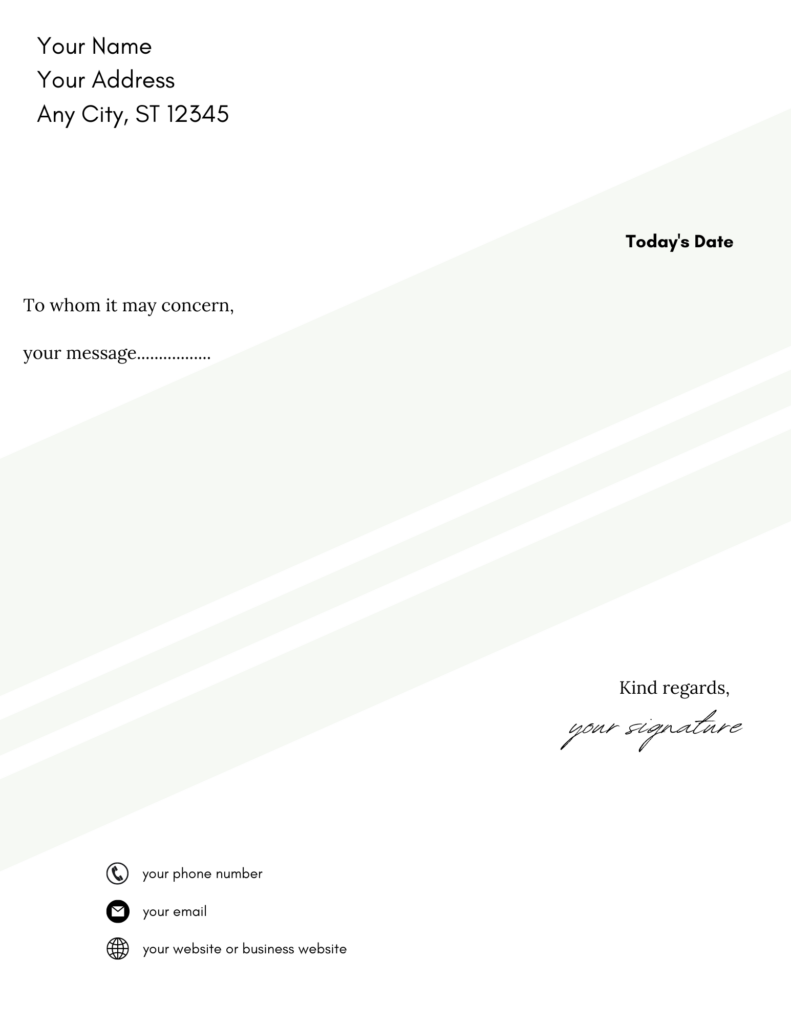
- Understand the Purpose and Audience: Before diving into the writing process, it is essential to understand the purpose of your letter and identify your target audience. Are you writing a cover letter, a business proposal, or a thank-you letter? Determine the recipient’s role and tailor your tone, language, and content accordingly. This will help you establish a connection and effectively address the reader’s needs. You can see a template you can follow pictured below.
- Choose the Right Format: The format of your professional letter contributes to its overall impression. Begin with a formal salutation, such as “Dear Mr./Ms. [Last Name],” unless you are familiar with the recipient. Next, introduce yourself concisely and state the purpose of your letter. Maintain a clear and logical structure by using paragraphs for each point and ensuring smooth transitions. Finally, conclude your letter with a polite closing, such as “Sincerely” or “Best regards,” followed by your name and contact information. You can see a template you can follow pictured below.
- Use Professional Language: To convey professionalism, it is crucial to use concise, clear, and formal language throughout your letter. Avoid jargon, slang, or overly technical terms that may confuse the reader. Instead, aim for a professional tone that demonstrates your knowledge and competence. Use active voice and strong verbs to add impact to your sentences, and keep the sentences and paragraphs brief for enhanced readability.
- Provide Relevant Information: When writing a professional letter, be mindful of providing relevant and accurate information. Make sure to include any necessary details, such as dates, names, and specific requests, to ensure clarity. Use bullet points or numbered lists to organize information, especially when presenting multiple ideas or outlining a proposal. If you are dealing with an account number, never use the full account number in your letter. Instead you can use the last four numbers. So, it may look like: Account : XXX -1234. Proofread your letter to eliminate any errors or inconsistencies that could undermine your credibility.
- Personalize Your Letter: Adding a personal touch to your professional letter can make it stand out. Reference previous interactions or shared experiences to create a sense of connection. Address the recipient by name and tailor the content to their specific needs or concerns. This demonstrates that you have taken the time to understand their situation, fostering a stronger professional relationship. I like to print my letter in black ink and then sign it with a pen of a different colored ink, such as a blue pen. Follow my professional letter template below for clarity.

Writing a professional letter may require careful consideration, but mastering this skill is invaluable in today’s business world. By understanding the purpose and audience, choosing the right format, using professional language, providing relevant information, and personalizing your letter, you can craft a compelling and impactful message. Remember, practice makes perfect, so take the time to refine your letter-writing skills and make a lasting impression in any formal setting.
Recent Comments