
Introducing yourself is a crucial skill that can open doors to new opportunities, whether it’s in professional settings, social gatherings, or even casual encounters. Making a positive first impression is essential, and by incorporating a few key elements, you can confidently introduce yourself in any situation. In this blog post, we will explore three fundamental aspects of a great introduction: making eye contact, exuding confidence, and the art of a firm handshake.
Stay tuned for more in this Life Skills Series. I will cover everything from personal skills, health and safety, physical habits, vehicle maintenance, home skills, professional skills, and financial skills. If you missed the first post, check out the information on how to use a calendar/schedule here. Today we will cover: how to introduce yourself and make a lasting impression. Let’s get started!
You can get my free printable Life Skills Checklist for you to download and print from home. It is a digital product and will be delivered instantly to your email for you to download and print from your device.
Here are some tips for Introducing Yourself with Confidence
- Making Eye Contact: When introducing yourself, making eye contact is a powerful non-verbal communication technique that establishes a connection and portrays sincerity. Follow these tips to master the art of making eye contact:
a. Maintain a natural gaze: Look directly into the other person’s eyes without staring intensely or glancing away too frequently. A relaxed and friendly gaze will create an immediate sense of connection.
b. Smile genuinely: A warm and genuine smile can instantly put others at ease and convey your openness and friendliness. Combine it with eye contact to make your introduction more inviting.
c. Pay attention to body language: While maintaining eye contact, ensure your body language aligns with your intention to connect. Stand or sit up straight, project an open and approachable posture, and avoid crossing your arms or fidgeting when introducing yourself.
- Exuding Confidence: Confidence is key when introducing yourself. Demonstrating self-assurance can leave a lasting impression and make others more receptive to you. Consider the following strategies to exude confidence:
a. Practice self-affirmation: Prior to introducing yourself, remind yourself of your strengths, accomplishments, and positive qualities. This mental exercise can boost your confidence and help you project a confident image. Check out my post here on How to Have a Healthy Thought Life: Life Skills Everyone Should Master.
b. Speak clearly and audibly: Articulate your words clearly, ensuring they are audible and easy to understand when introducing yourself. Speak with a calm and steady tone, and avoid rushing or mumbling. Pausing appropriately can also add impact to your introduction.
c. Use positive body language: Your body language speaks volumes about your confidence. Maintain an upright posture, avoid fidgeting, and use gestures that reflect your enthusiasm and engagement. These actions will reinforce your confident demeanor.
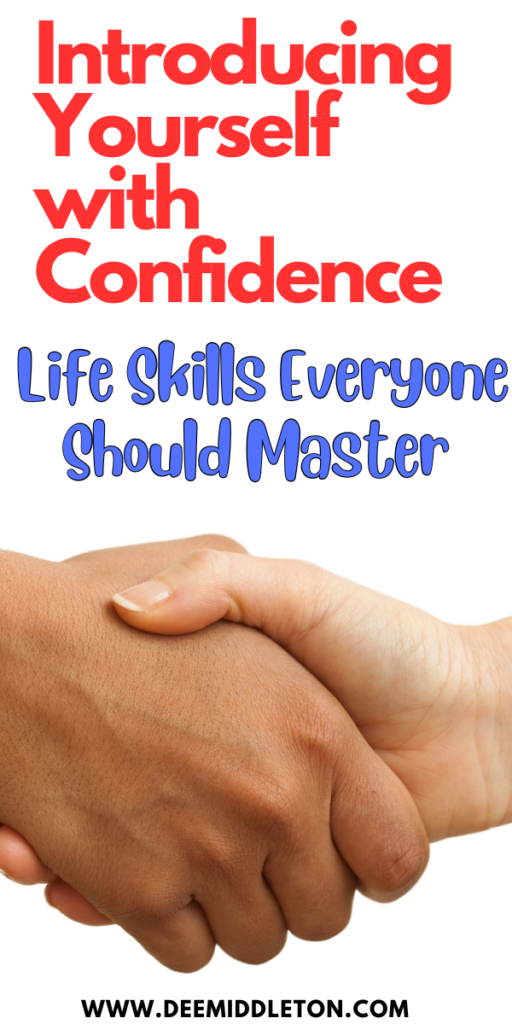
- The Art of a Firm Handshake: A handshake is a universal greeting and a powerful way to convey respect and professionalism when introducing yourself. It creates connection. When executed properly, it can leave a lasting impression. Here’s how to perfect the art of a firm handshake:
a. Offer a full hand: Extend your hand with your fingers together and palm open. This gesture shows openness and indicates your willingness to connect.
b. Maintain a firm grip: Aim for a grip that is neither too weak nor too strong. Squeeze the other person’s hand gently, matching their level of firmness. A confident handshake can create an immediate sense of rapport.
c. Be mindful of duration: A handshake should be brief but not rushed. Maintain contact for about two to three seconds while maintaining eye contact and a warm smile. This timeframe allows for a genuine connection without making the other person uncomfortable.
Here are 9 Tips To Improve Your Professional Handshake.
Also check out my post on How to Have Good Communication Skills: Life Skills Series here.
Recent Comments