
Maintaining the cleanliness of your floors is essential for a healthy and inviting home. Instead of relying on commercial cleaners with potentially harsh chemicals, why not create your own DIY all-purpose floor cleaner? This simple recipe is effective on various floor types and allows you to control the ingredients for a more eco-friendly and budget-friendly cleaning solution. I would caution you not to use this recipe on wood floors. I have a recipe linked at the end of this post for cleaning wood floors.
You can get your printable Daily Housekeeping Routine and Cleaning Checklists here. This 15 page printable kit is delivered digitally to your email for you to print and personalize. It includes a daily schedule, calendar pages, and deep cleaning checklists for every room and area of your home. Today, I’ll help you mix up your own DIY all-purpose floor cleaner.
Get my free homemaking ebook when you subscribe. You can subscribe via the popup window or by leaving a comment below.
If you are new to the blog, welcome! I blog about cleaning, decluttering, and organizing. You can find more free printables to help you get organized in the drop down menu under the Printables category. Now let’s look at how to create your own DIY all-purpose floor cleaner.
You can also check out this post on 14 deep cleaning hacks neat freaks love.
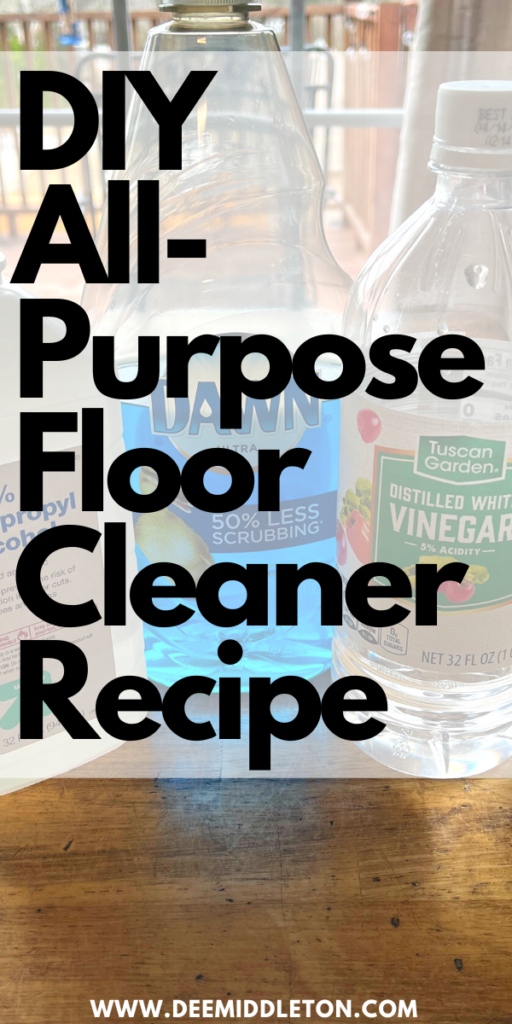
DIY All-Purpose Floor Cleaner (not for wood floors, use wood floor cleaning recipe at the end of this post)
Ingredients:
- 1 cup distilled white vinegar
- 1 cup water
- 1 cup rubbing alcohol
- 2-3 drops of dish soap (optional)
- 10-20 drops of essential oil (e.g., tea tree, lavender, lemon) for a pleasant scent (optional)

Instructions:
- Mixing the DIY all-purpose floor cleaner Solution: In a mixing bowl, combine the white vinegar, water, and rubbing alcohol.
- Enhance Cleaning Power: If you desire extra cleaning power, add a few drops of dish soap to the mixture. This is particularly useful for tackling stubborn stains.
- Aromatherapy Touch: For a delightful fragrance and additional antibacterial properties, add 10-20 drops of your favorite essential oil. Options like tea tree, lavender, or lemon work well.
- Thoroughly Combine: Stir the ingredients well to ensure they are thoroughly mixed.
- Transfer to a Spray Bottle: Pour the mixture into a spray bottle for easy application. A spray bottle allows for precise and controlled usage.
Usage Tips:

- Spot Test: Before applying the DIY all-purpose floor cleaner to your entire floor, perform a spot test in an inconspicuous area to ensure compatibility with your specific flooring.
- Pre-Cleaning Prep: Sweep or vacuum the floor before using the cleaner to remove loose dirt and debris.
- Application: Lightly mist the solution onto the floor and mop or wipe as usual. Adjust the recipe based on your preferences and the size of the container you are using.
Caution:
- Avoid using the DIY all-purpose floor cleaner on Natural Stone: Do not use vinegar-based cleaners on natural stone floors, as vinegar can damage the surface.

With this DIY all-purpose floor cleaner, you can embrace sparkling, clean floors without the worry of harsh chemicals. Take control of your cleaning routine, and enjoy a fresh and welcoming home with this eco-friendly and budget-conscious solution.
Give it a try, and let the natural power of these ingredients bring out the beauty in every step you take. Happy cleaning!
Will alcohol damage wood floors?
While alcohol can be a useful component in DIY cleaning solutions due to its disinfectant properties, it’s important to use it cautiously on wood floors. Excessive use of alcohol or using solutions with high alcohol content may potentially damage certain types of wood finishes. Here are some considerations:
- Lacquered or Varnished Floors: If your wood floors have a lacquered or varnished finish, alcohol-based solutions in moderation are generally safe. However, excessive use over time may lead to the breakdown of the finish.
- Oiled or Waxed Floors: Alcohol can strip away oil or wax finishes on wood. If your wood floors are treated with oil or wax, it’s advisable to avoid using alcohol-based cleaners as they can diminish the protective layer.
- Unfinished or Untreated Wood: Avoid using alcohol-based cleaners on unfinished or untreated wood, as they may absorb the alcohol, leading to swelling or discoloration.
- Spot Testing: Before using any cleaning solution, including those with alcohol, it’s crucial to perform a spot test in an inconspicuous area to ensure it doesn’t cause any damage or discoloration.
If you’re uncertain about the type of finish on your wood floors or if they are particularly sensitive, consider consulting with the manufacturer or a flooring professional for specific care recommendations.
For a general DIY floor cleaner suitable for most wood floors, you might want to modify the recipe above to be more wood-friendly as seen below:
DIY Wood Floor Cleaner
- Mix equal parts white vinegar and water.
- Add a small amount of mild dish soap.
- Optionally, include a few drops of essential oil for a pleasant fragrance.
Always apply any cleaning solution sparingly to prevent excess moisture from damaging the wood. Additionally, promptly wipe away any spills or standing liquid on wood floors to avoid potential damage.
In summary, while alcohol can be used cautiously on certain wood finishes, it’s essential to be mindful of the type of finish your wood floors have and perform regular spot tests to ensure compatibility. That is why I recommend the DIY wood floor cleaner above.
Very helpful
Hello! Welcome aboard! I have lots of free printables you can find under the printables category on the drop down menu at the top of this page to help you get organized. I just signed you up for the email list! Watch your inbox for a coupon code for my free ebook.