
A bill of sale is a legal document that serves as proof of ownership transfer for personal property. Whether you’re buying or selling a car, furniture, electronics, or any other valuable item, knowing how to write a bill of sale is essential. In this comprehensive guide, we will walk you through the process of creating a bill of sale, ensuring that all necessary information is included to protect both the buyer and the seller. By following these steps, you can confidently complete a bill of sale and facilitate a smooth transaction. I will also include what questions you should as before signing a bill of sale. I will also give you my Free Printable Bill of Sale you can download and print from home. I will link it at the end of this post.
Stay tuned for more in this Life Skills Series. I will cover everything from personal skills, health and safety, physical habits, vehicle maintenance, home skills, professional skills, and financial skills. If you missed the first post, check out the information on how to use a calendar/schedule here. Today we will cover: how to write a bill of sale. Let’s get started!
You can get my free printable Life Skills Checklist for you to download and print from home. It is a digital product and will be delivered instantly to your email for you to download and print from your device.
How to Write a Bill of Sale: A Step-by-Step Guide
- Start with a Clear Header
How to write bill of sale: Begin the bill of sale with a clear and descriptive header that identifies it as a “Bill of Sale.” Include the date of the transaction and both the buyer’s and seller’s contact information, including full names, addresses, and phone numbers.
- Provide Detailed Item Description
Include a detailed description of the item being sold. Mention the make, model, year (if applicable), serial number or vehicle VIN number (if applicable), and any distinguishing features. This information helps clearly identify the item and avoid confusion.
- State the Sale Price and Payment Terms
Clearly state the agreed-upon sale price of the item. Specify the currency and dollar amount and whether it is a lump sum or if there are any installment payments. Additionally, include any payment terms, such as the method of payment (cash, check, bank transfer) and any deadlines or milestones.
- Declare the Condition and Warranty (if applicable)
If there is a warranty or guarantee associated with the item being sold, clearly state its terms and duration. Additionally, disclose the condition of the item, whether it is sold “as-is” or if there are any known defects. An item that is sold “as is” usually carries no warranty, so you will want to state that in your bill of sale. This protects both the buyer and the seller and avoids misunderstandings.
- Include Seller’s Disclosure (if required)
Depending on the jurisdiction or the nature of the transaction, sellers may be required to disclose certain information. For example, in vehicle sales, sellers often need to disclose the vehicle’s mileage or any known accidents. Research and ensure compliance with relevant laws and regulations to include any necessary disclosures.
- Signatures and Notarization
Include spaces for both the buyer and the seller to sign and date the bill of sale. Depending on the jurisdiction and the value of the item, notarization may be required. Notarization adds an additional layer of authenticity and legal validity to the document.
Now, you have learned how to write a bill of sale, but maybe you are the one purchasing an item and are not sure what questions you should even ask the seller. Check out these important questions you should ask before signing a sale agreement.
What questions should you ask before signing a bill of sale?
Now that you you know how to write a bill of sale, there are some questions you should ask before you sign one.
Before signing a bill of sale, it’s essential to ask the following questions to ensure a smooth and secure transaction:
- Is the Seller the Legal Owner?
- Verify the seller’s identity and confirm that they are the legal owner of the item being sold.
- Request proof of ownership, such as a title, registration, or relevant documentation.
- What Is the Item’s Condition?
- Inquire about the current condition of the item.
- Ask if there are any known defects, damages, or issues that might affect its functionality or value.
- Are There Any Outstanding Liens or Encumbrances?
- Determine if there are any outstanding debts, liens, or encumbrances on the item.
- Request documentation or proof that the item is free from any financial obligations.
- What Is the Purchase Price and Payment Method?
- Clarify the agreed-upon purchase price of the item.
- Discuss the accepted payment methods and ensure both parties are in agreement.
- Are There Any Warranties or Guarantees?
- Inquire if there are any warranties or guarantees associated with the item.
- Understand the terms, duration, and coverage of any warranties provided.
- Are There Any Disclosures or Known Issues?
- Ask the seller if there are any additional disclosures or known issues related to the item.
- Request transparency regarding any past repairs, accidents, or maintenance history.
- Are There Specific Terms or Conditions?
- Discuss and clarify any specific terms or conditions agreed upon by both parties.
- Address any concerns or special requirements regarding the sale.
- Can I Review the Bill of Sale Before Signing?
- Request a copy of the bill of sale in advance to review its contents thoroughly.
- Ensure that all the necessary details, including item description, purchase price, and payment terms, are accurately reflected.
- Do I Understand the Legal Implications?
- If needed, consult with a legal professional to ensure you fully understand the legal implications of signing the bill of sale.
- Seek guidance regarding any specific laws or regulations relevant to the transaction.
By asking these questions and addressing any concerns or uncertainties before signing the bill of sale, you can protect yourself as a buyer and make an informed decision.
Here are 10 Car Buying Tips from a reputable financial planner.
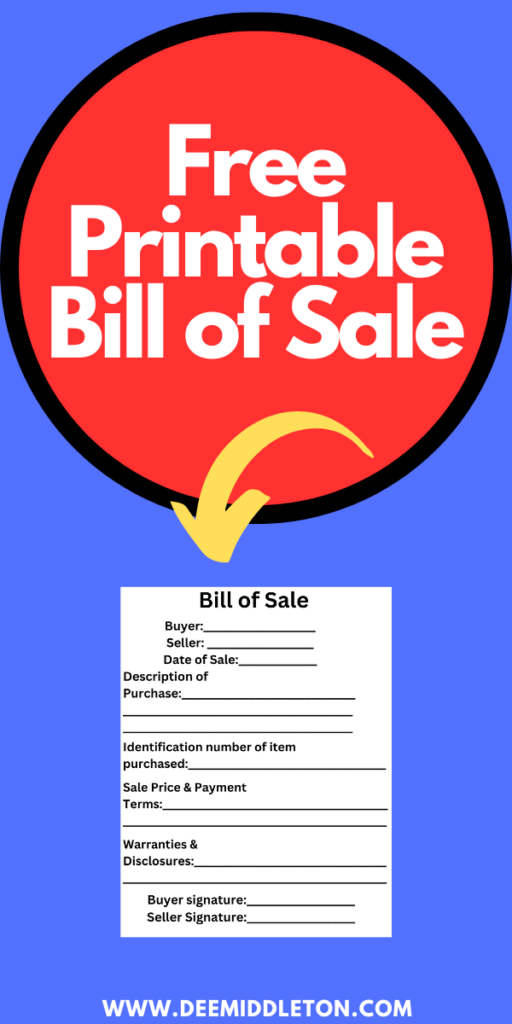
Now you know how to write a bill of sale on your own, but you can certainly use my free printable copy. You can find my Free Printable Bill of Sale you can download and print from home here.
Recent Comments