
Spring is the most exciting season for gardeners. After a long winter, warmer temperatures and longer days signal that it’s finally time to get outside and start planting. But one of the most common questions beginners ask is: When exactly should you plant flowers in spring? The best time to plant flowers in Spring depends on several factors we will cover today.
Planting too early can expose delicate plants to frost damage, while planting too late can shorten the growing season. The key is understanding a few basic gardening factors—especially frost dates, soil temperature, and the types of flowers you’re planting.
In this guide, we’ll walk through everything you need to know about the best time to plant flowers in spring so your garden can thrive all season long.
Check out my post here on How to Start a Flower Garden from Seeds.
You may enjoy my post on How to Start a Flower Garden on a Budget. Also, check out my post here on How to Plan Your First Flower Garden. Or, check out my post on 25 Easy Flowers for Beginner Gardeners here and this post here on Flower Gardening Basics: Essential Terms Every Beginner Should Know.
Why Timing Matters When Planting Flowers
Planting at the right time can make the difference between a garden that flourishes and one that struggles.
If flowers are planted too early, they may experience:
- Frost damage
- Stunted growth
- Rotting roots in cold soil
If planted too late, flowers may:
- Bloom later than expected
- Have shorter blooming seasons
- Struggle in early summer heat
Proper timing ensures your plants have the ideal conditions to establish strong roots and healthy growth.
The Most Important Date: Your Last Frost Date
The last frost date is the average date in spring when your area experiences its final frost. This date acts as a guideline for when it is safe to plant most flowers outdoors.
After this date, temperatures are usually warm enough for tender plants to survive.
General Example of Last Frost Dates in the U.S.
| Region | Approximate Last Frost |
|---|---|
| Southern U.S. | March – early April |
| Midwestern U.S. | Mid April – early May |
| Northern U.S. | Mid May – early June |
Gardeners in warm climates can plant much earlier than those in cooler northern areas.
If you want the most accurate date, check your USDA Hardiness Zone, which gives guidance based on average climate patterns.
Flower Types and When to Plant Them
Not all flowers should be planted at the same time. Some plants tolerate cooler weather, while others require warm soil and temperatures.
1. Hardy Annuals (Early Spring)
Hardy annuals tolerate cooler temperatures and even light frost. These can be planted 2–4 weeks before your last frost date.
Examples include:
- Pansies
- Sweet peas
- Larkspur
- Calendula
- Bachelor’s buttons
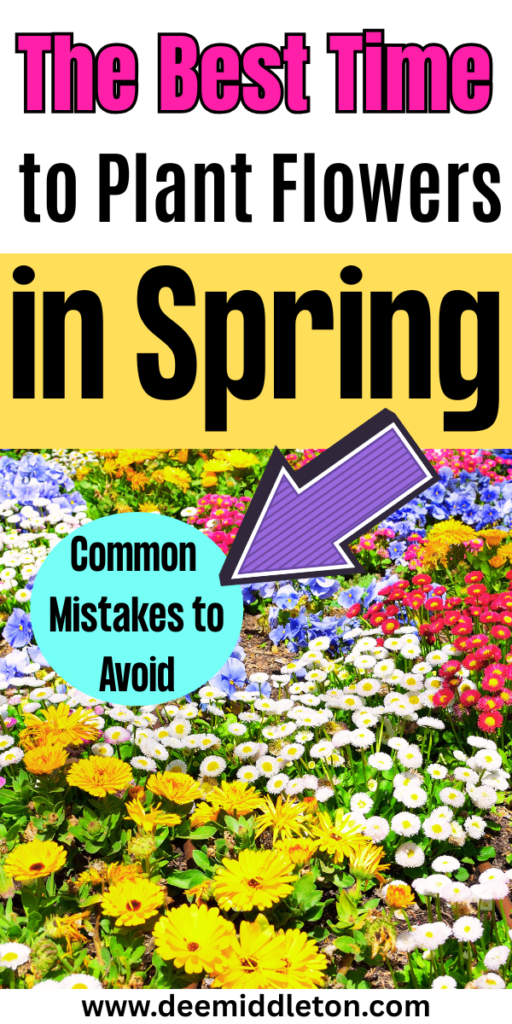
Because they prefer cooler temperatures, these flowers often bloom beautifully in early spring before summer heat arrives.
2. Half-Hardy Annuals (Mid Spring)
Half-hardy annuals can tolerate cool conditions but are sensitive to frost. These are usually planted around your last frost date.
Popular half-hardy annuals include:
- Petunias
- Snapdragons
- Nasturtiums
- Cosmos
Planting them too early may expose them to frost, so many gardeners wait until nighttime temperatures stay above 40°F–45°F.
3. Tender Annuals (Late Spring)
Tender annuals love warm weather and cannot tolerate frost at all. These should be planted 1–2 weeks after the last frost date, once soil and air temperatures warm up.
Examples include:
- Zinnias
- Marigolds
- Impatiens
- Sunflowers
- Celosia
Planting these flowers too early often leads to slow growth or damaged plants.
Starting Seeds Indoors vs. Direct Sowing
Another factor that affects planting time is whether you start seeds indoors or plant them directly outside.
Starting Seeds Indoors
Many gardeners start seeds indoors 6–8 weeks before the last frost date. This gives plants a head start so they can be transplanted into the garden when the weather warms.
Flowers commonly started indoors include:
- Petunias
- Impatiens
- Snapdragons
- Begonias
Starting indoors is especially helpful in cooler climates with shorter growing seasons.
Direct Sowing Outdoors
Some flowers grow best when seeds are planted directly in the soil.
Common direct-sow flowers include:
- Zinnias
- Sunflowers
- Cosmos
- Nasturtiums
These plants usually germinate quickly and prefer not to be transplanted.
Soil Temperature Matters Too
Air temperature is important, but soil temperature plays an equally important role in seed germination and root growth.
Many flower seeds need soil temperatures of 60°F–70°F to sprout successfully.
Cold soil can cause:
- Slow germination
- Seed rot
- Weak seedlings
A simple soil thermometer can help determine when the ground is warm enough for planting.
Watch the Weather Forecast
Spring weather can be unpredictable. Even after the last frost date, sudden cold snaps can still occur.
Before planting, check the 7–10 day forecast to make sure temperatures will remain stable.
If a surprise frost is expected, you can protect plants with:
- Frost cloths
- Blankets
- Garden cloches
- Mulch
These simple protections can save young plants from cold damage.
Signs That It’s Time to Plant
In addition to frost dates, nature often provides clues that spring planting time has arrived.
Watch for these natural signals:
- Trees beginning to leaf out
- Grass turning green
- Soil no longer frozen or muddy
- Consistent nighttime temperatures above 40–50°F
These signs often indicate that soil temperatures are warming and plants are ready to grow.
A Simple Spring Flower Planting Timeline
Here is an easy timeline many gardeners follow:
4 weeks before last frost
- Plant hardy annuals
- Start seeds indoors
Around the last frost date
- Plant half-hardy annuals
- Transplant hardened seedlings
1–2 weeks after last frost
- Plant tender annuals
- Direct sow warm-season flowers
Following this schedule helps ensure each plant type is planted at the ideal time.
Common Mistakes to Avoid
Planting Too Early
The excitement of spring can tempt gardeners to plant too soon. Waiting until conditions are right will lead to healthier plants.
Ignoring Your Climate Zone
Planting calendars vary widely depending on where you live.
Not Hardening Off Indoor Plants
Seedlings started indoors must be gradually introduced to outdoor conditions before transplanting.
The best time to plant flowers in spring depends on your local frost date, soil temperature, and the type of flowers you’re growing. By understanding these factors, you can give your plants the best chance for strong growth and beautiful blooms.
A little patience in early spring often leads to a much healthier and more vibrant garden later in the season.
Once you learn to work with the natural rhythms of the season, planting your flower garden becomes easier—and far more rewarding.
Recent Comments