
Spring is one of the most exciting times of the year for gardeners. After months of cold weather and dormant landscapes, colorful flowers begin to emerge and gardens come back to life. Whether you’re planting your very first flower garden or preparing an established garden for another growing season, having a spring flower gardening checklist can help ensure success.
By taking care of a few important tasks early in the season, you’ll create healthier plants, enjoy more blooms, and reduce gardening problems later in the year.
Use this spring flower gardening checklist to get your garden ready for a beautiful growing season.
Check out this post on the best flowers for full sun or the best flowers for shade here. You may enjoy my post on How to Start a Flower Garden on a Budget. Also, check out my post here on How to Plan Your First Flower Garden. Or, check out my post on 25 Easy Flowers for Beginner Gardeners here and this post here on Flower Gardening Basics: Essential Terms Every Beginner Should Know.
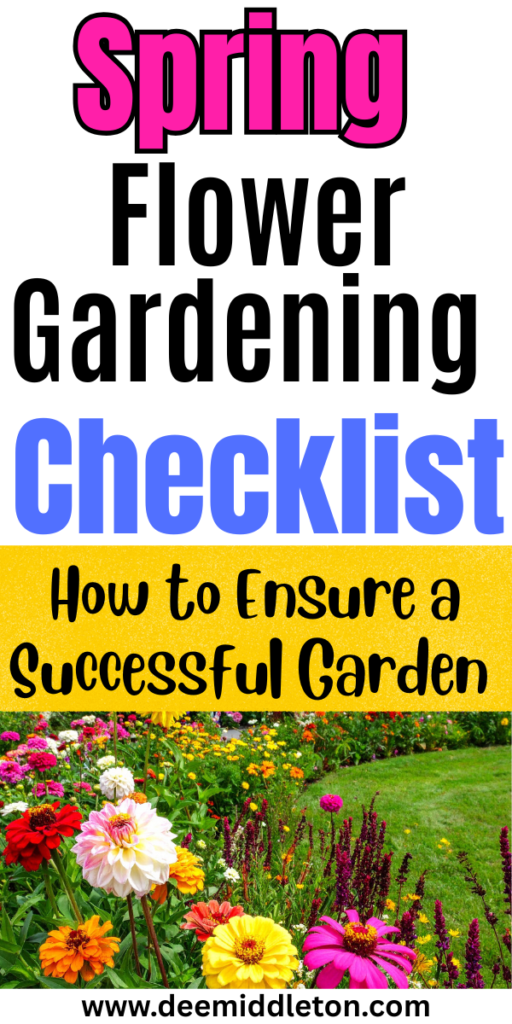
Spring Flower Gardening Checklist
1. Clean Up Your Flower Beds
One of the first tasks of spring gardening is cleaning up any debris left behind by winter.
Remove:
- Fallen branches
- Dead leaves
- Old mulch
- Weeds
- Dead annual plants
Cleaning up flower beds improves air circulation, reduces hiding places for pests, and gives you a clear view of what survived the winter.
Be careful around emerging perennials, as new growth can sometimes be hidden beneath leaves and garden debris.
2. Inspect Your Garden for Winter Damage
Winter weather can be hard on plants and garden structures.
Take time to inspect:
- Perennials
- Shrubs
- Garden edging
- Raised beds
- Trellises
- Fencing
Prune away damaged stems and branches. Repair any structures that were damaged by snow, ice, or strong winds before plants begin growing vigorously.
3. Test Your Soil
Healthy flowers start with healthy soil.
Spring is an excellent time to test your garden soil for:
- pH levels
- Nutrient deficiencies
- Organic matter content
Many local extension offices offer affordable soil testing services. Knowing what’s happening beneath the surface helps you choose the right soil amendments and fertilizers.
4. Add Compost
Compost is one of the best things you can add to a flower garden.
Benefits include:
- Improved soil structure
- Better drainage
- Increased nutrient availability
- Enhanced moisture retention
Spread 1 to 2 inches of compost across your flower beds and gently work it into the top few inches of soil.
5. Divide Overcrowded Perennials
Many perennials benefit from division every few years.
Common flowers that often need dividing include:
- Daylilies
- Hostas
- Black-eyed Susans
- Shasta daisies
- Bee balm
Dividing plants helps prevent overcrowding and often results in healthier growth and more blooms.
As a bonus, you’ll have free plants to expand your garden or share with friends.
6. Remove Winter Mulch
If you applied mulch for winter protection, remove or thin it once temperatures consistently warm.
Heavy mulch can:
- Trap moisture
- Slow soil warming
- Prevent new growth from emerging
Leave a thin layer in place to help suppress weeds and retain moisture.
7. Plan Your Garden Layout
Before buying plants, take time to plan your flower garden.
Consider:
- Sunlight requirements
- Mature plant size
- Bloom times
- Color combinations
- Plant height
Planning ahead helps avoid overcrowding and ensures continuous blooms throughout the season.
Sketching your garden on paper can help you visualize where everything will go.
8. Start Seeds Indoors
Many flowers benefit from an early start indoors. You can read my post here on How to Start a Flower Garden from Seeds.
Popular flowers to start from seed include:
- Zinnias
- Marigolds
- Cosmos
- Celosia
- Snapdragons
- Petunias
Check seed packets for recommended starting times based on your area’s last frost date.
Starting seeds indoors can save money and provide a larger selection of flower varieties.
9. Prune Spring-Flowering Shrubs Carefully
Not all shrubs should be pruned in early spring.
Shrubs that bloom on old wood, such as:
- Lilacs
- Azaleas
- Forsythia
should generally be pruned after flowering.
Pruning too early may remove flower buds and reduce blooms for the season.
10. Plant Cool-Season Flowers
As soon as the soil becomes workable, you can begin planting cool-season flowers.
Good choices include:
- Pansies
- Violas
- Sweet Alyssum
- Dianthus
- Calendula
These flowers tolerate cooler temperatures and can provide early-season color while you wait for warmer weather.
11. Check Irrigation Systems
Before summer heat arrives, inspect your watering system.
Check:
- Garden hoses
- Drip irrigation lines
- Sprinklers
- Hose connections
Look for leaks, clogs, and damaged components.
Proper watering is critical for healthy flowers throughout the growing season.
12. Fertilize Wisely
Many flowering plants benefit from a spring feeding.
Choose a fertilizer appropriate for flowering plants and follow label directions carefully.
Over-fertilizing can produce excessive foliage at the expense of blooms.
Organic options such as compost, worm castings, and slow-release fertilizers can provide steady nutrition throughout the season.
13. Plant New Perennials
Spring is one of the best times to plant perennials.
Popular options include:
- Coneflowers
- Salvia
- Coreopsis
- Blanket Flower
- Yarrow
- Veronica
Planting in spring allows roots to establish before summer heat arrives.
Water newly planted perennials regularly until established.
14. Watch for Early Pests
Many garden pests become active in spring.
Keep an eye out for:
- Aphids
- Slugs
- Snails
- Spider mites
- Caterpillars
Early detection often makes pest problems easier to manage.
Inspect plants regularly and address issues before they become severe.
15. Add Fresh Mulch
After planting and weeding, apply a fresh layer of mulch.
Mulch helps:
- Suppress weeds
- Retain moisture
- Moderate soil temperature
- Improve garden appearance
Aim for a layer about 2 to 3 inches deep, keeping mulch away from plant stems and crowns.
16. Plant Summer-Blooming Bulbs
Once the danger of frost has passed, plant summer-flowering bulbs and tubers.
Popular choices include:
- Dahlias
- Gladiolus
- Cannas
- Elephant ears
- Caladiums
These plants provide spectacular color throughout summer and into fall.
17. Label Your Plants
Plant labels may seem unnecessary in spring, but they can be extremely helpful later.
Labels help you remember:
- Plant varieties
- Bloom colors
- Planting locations
- Care requirements
Weather-resistant markers are best for outdoor gardens.
18. Create a Garden Journal
Keeping records can improve your gardening success year after year.
Track:
- Planting dates
- Bloom times
- Fertilizer applications
- Pest issues
- Weather conditions
A garden journal helps you identify patterns and make better decisions in future seasons.
19. Make Room for Pollinators
Pollinators are essential for a healthy garden ecosystem.
Plant flowers that attract:
- Bees
- Butterflies
- Hummingbirds
Excellent pollinator-friendly flowers include:
- Zinnias
- Coneflowers
- Bee Balm
- Salvia
- Cosmos
Avoid unnecessary pesticide use whenever possible.
20. Enjoy the Process
Spring gardening isn’t just about chores and checklists.
Take time to enjoy:
- New growth emerging
- Early blooms
- Visiting pollinators
- Time spent outdoors
Gardening is one of the most rewarding hobbies you can have, and spring offers a fresh start filled with possibilities.
A little preparation in spring can lead to months of beautiful blooms and healthier plants. By following this spring flower gardening checklist, you’ll set your garden up for success and create a colorful outdoor space you can enjoy throughout the growing season. You can find a great spring gardening checklist here from roots nursery.
Remember that every garden is unique. Adapt these tasks to your climate, growing zone, and gardening goals. With a bit of planning and consistent care, your flower garden can thrive all season long.
Recent Comments