
Clutter is often treated as a simple housekeeping problem. Many people assume it happens because someone is lazy, disorganized, or simply owns too many things. But the truth is much more complex. In many cases, clutter is the visible result of deeper psychological patterns. This is why clutter builds up psychologically.
Our homes are where our emotions, habits, memories, and decision-making processes intersect. When life becomes stressful, overwhelming, or busy, clutter can quietly accumulate until it starts to feel out of control. Even the “to do list” in your head can increase psychological clutter, right?
The good news is that once you understand why clutter builds up psychologically, it becomes much easier to stop the cycle. When you address the mental and emotional roots of clutter—not just the physical mess—you can create lasting change in your home and your life.
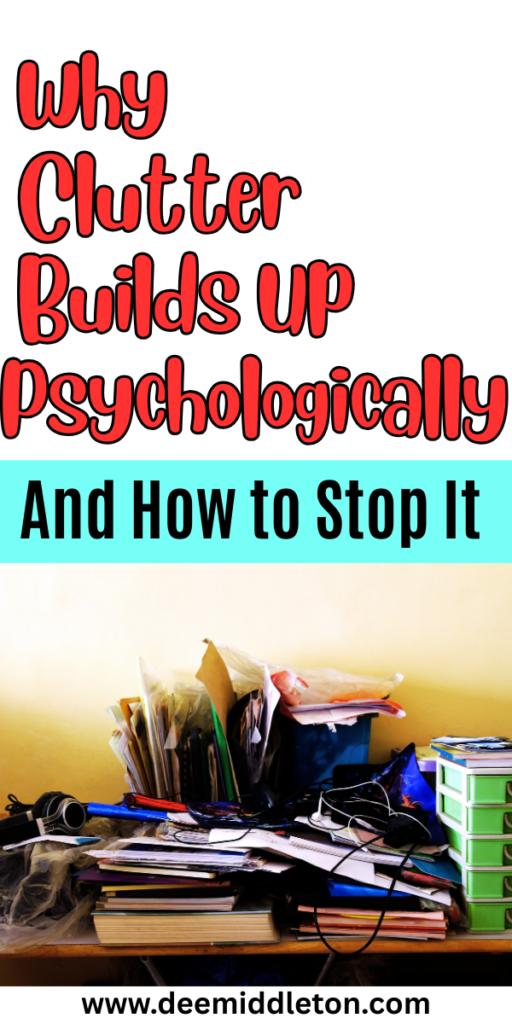
Let’s explore the most common psychological reasons clutter accumulates and practical ways to break the pattern.
Also, you can get the complete digital printable copy of the Year Long Thorough Declutter Series Calendar and Checklists here. The printable digital download is delivered to your email. It includes 25 pages of printable calendar pages and checklists to help you declutter every room in your home.
You can find that here.
Struggling with the daily housekeeping chores? Check out my ebook on this topic, entitled Make Over Your Homemaking. Use this link to get it at a discounted price. Now, let’s look at why clutter builds up psychologically and how we can stop it.
Why Clutter Builds Up Psychologically (And How to Stop It)
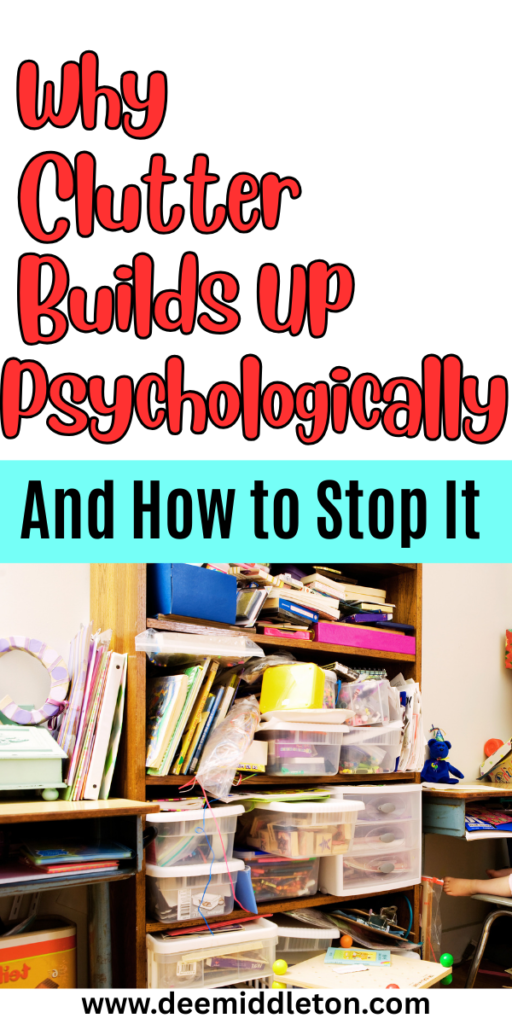
1. Decision Fatigue
One of the biggest psychological drivers of clutter is decision fatigue.
Every time you pick up an object while decluttering, your brain has to make a decision:
- Keep it?
- Donate it?
- Throw it away?
- Move it somewhere else?
- Save it “just in case”?
When you multiply those decisions by hundreds or thousands of items, your brain becomes overwhelmed. Eventually, it simply chooses the easiest option: do nothing.
Instead of deciding, we often create piles or move items from one place to another.
How to Stop It
Reduce the number of decisions you have to make.
Try these strategies:
- Declutter one small category at a time (for example: socks, coffee mugs, or cleaning supplies).
- Set a 15–20 minute timer.
- Use simple rules like:
- Haven’t used it in a year? Donate it.
- Broken and not repaired in 30 days? Toss it.
- Duplicate item? Keep the best one.
Simplifying decisions dramatically reduces mental exhaustion.
2. Emotional Attachment to Objects
Many items in our homes represent memories, relationships, or identity.
Examples include:
- Childhood items
- Gifts from loved ones
- Clothing from a different life stage
- Souvenirs from trips
- Inherited belongings
Letting go of these things can feel like letting go of the memories attached to them. Psychologically, our brains associate the object with the emotion. If these items trigger negative emotions, I highly recommend getting rid of them! I want you hold on to happy memories! You can read more about Decluttering for Emotional Well-being here.
But the truth is the memory exists in you, not the object.
How to Stop It
Try reframing how you view sentimental items.
Helpful strategies include:
- Take photos of meaningful items before donating them.
- Keep one representative item instead of many.
- Create a small memory box rather than storing everything.
You honor the memory without letting it take over your space.
3. The “Just in Case” Mindset
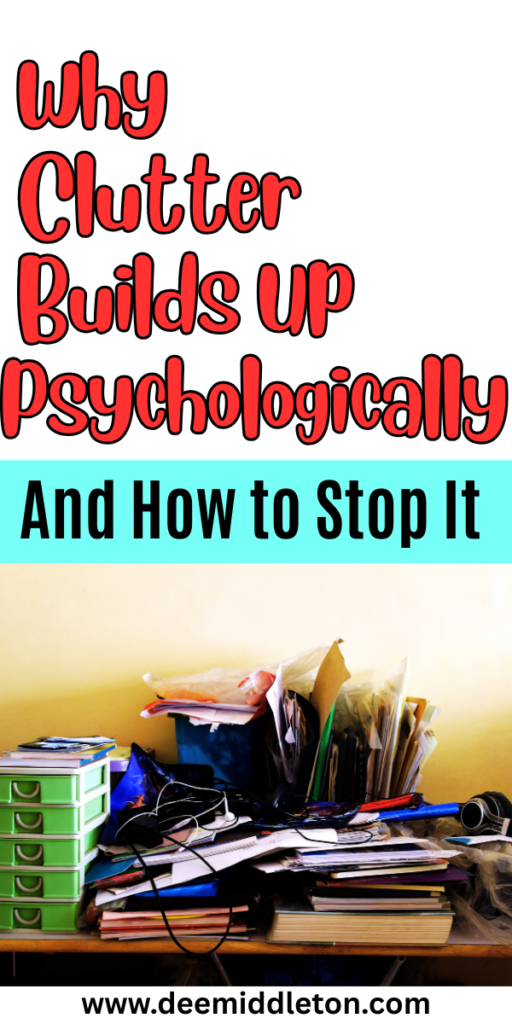
Many people keep items because they believe they might need them someday.
Common examples include:
- Old electronics
- Extra cords and cables
- Duplicate kitchen gadgets
- Clothing that might fit again
- Craft supplies for future projects
This mindset is rooted in scarcity thinking—the fear that if we get rid of something, we won’t be able to replace it.
But in reality, many of these items sit unused for years.
How to Stop It
Ask yourself three simple questions:
- When was the last time I used this?
- Could I easily replace it if needed?
- Would replacing it actually cost less than storing it for years?
Often the answer reveals that keeping the item isn’t necessary.
4. Avoidance and Overwhelm
Clutter can also accumulate when life feels overwhelming.
Stressful events such as:
- Busy work schedules
- Family responsibilities
- Health challenges
- Emotional stress
These problems can make cleaning and organizing feel impossible.
When we feel overwhelmed, our brains tend to avoid difficult tasks. Clutter slowly builds while we focus on more immediate concerns. This is another reason why clutter builds up psychologically.
How to Stop It
Start smaller than you think you should.
Instead of trying to declutter an entire room, try:
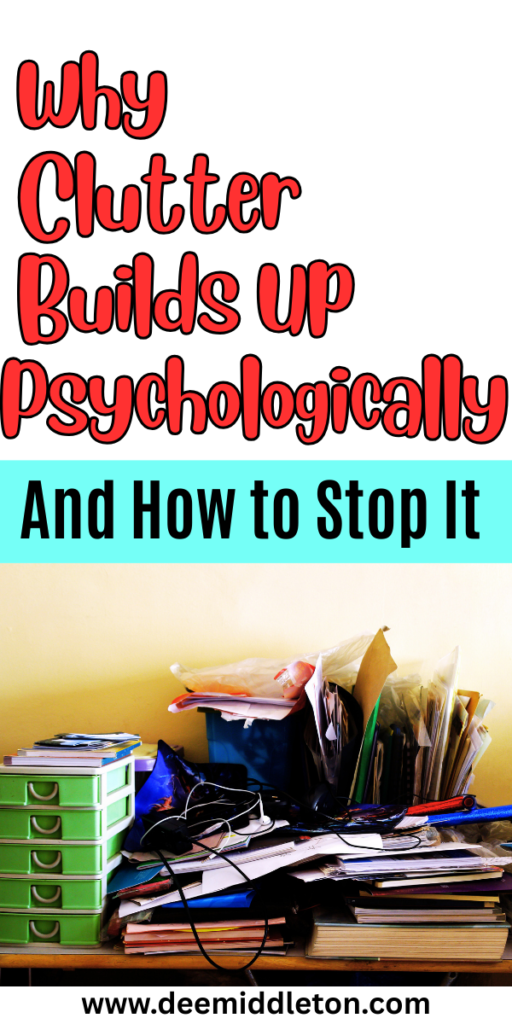
- One drawer
- One shelf
- One small surface
Small wins reduce overwhelm and build momentum.
5. Identity Clutter
Many people hold onto items that represent who they wish they were rather than who they are right now.
Examples include:
- Exercise equipment that goes unused…which makes you feel guilty 😉
- Craft supplies for hobbies never started
- Fancy kitchen tools for cooking styles you rarely use
- Clothes for a lifestyle you don’t actually live
These items represent aspirations, which makes them emotionally difficult to release.
How to Stop It
Ask yourself:
“Does this item support the life I actually live today?”
If the answer is no, it may be time to let it go.
This creates space for the life you truly want to build.
6. The Sunk Cost Fallacy
The sunk cost fallacy is a powerful psychological trap. (This is MY struggle most often!)
It happens when we keep something simply because we spent money on it.
Examples include:
- Expensive clothes never worn
- Kitchen gadgets used once
- Home decor that no longer fits your style
We feel guilty getting rid of something that cost money, even if it no longer serves us. This is why clutter builds up psychologically.
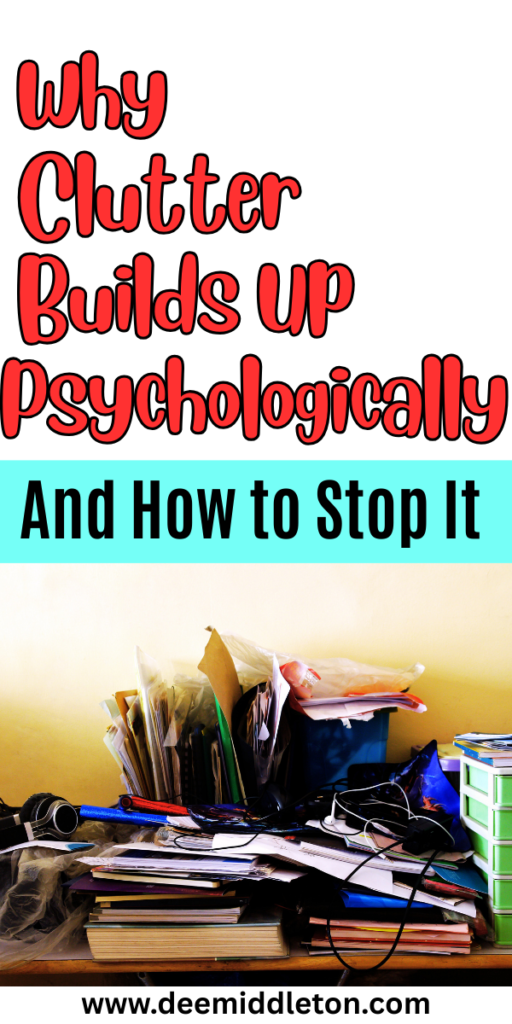
But the truth is:
The money is already gone whether you keep the item or not. You might want to read that again 😉
How to Stop It
Shift your perspective.
Instead of focusing on the money spent, ask:
- Is this item adding value to my life now?
- Is it worth the space it takes up?
- Can I be more generous and give this away? Can it bless someone else?
Sometimes letting go is the most freeing choice, and it feels good to give!
7. Lack of Systems
Even people who love clean homes can struggle with clutter if they don’t have simple organizational systems. This is ME at times!
Without designated homes for items, things begin to pile up.
Common problem areas include:
- Paperwork
- Laundry
- Shoes
- Kitchen counters
Clutter thrives where systems don’t exist.
How to Stop It
Create simple systems for everyday items.
Examples include:
- A mail sorting station
- A donation bin that stays in the closet
- A laundry routine on specific days
- A basket for items that belong in another room
Systems reduce the mental effort required to stay organized.
8. The “I’ll Deal With It Later” Habit
Clutter often grows from small delays.
We set something down thinking:
“I’ll put it away later.”
But later turns into tomorrow, then next week, and eventually the item becomes part of the background clutter.
These small decisions accumulate quickly.
How to Stop It
Practice the One-Minute Rule.
If something takes less than one minute to put away, do it immediately.
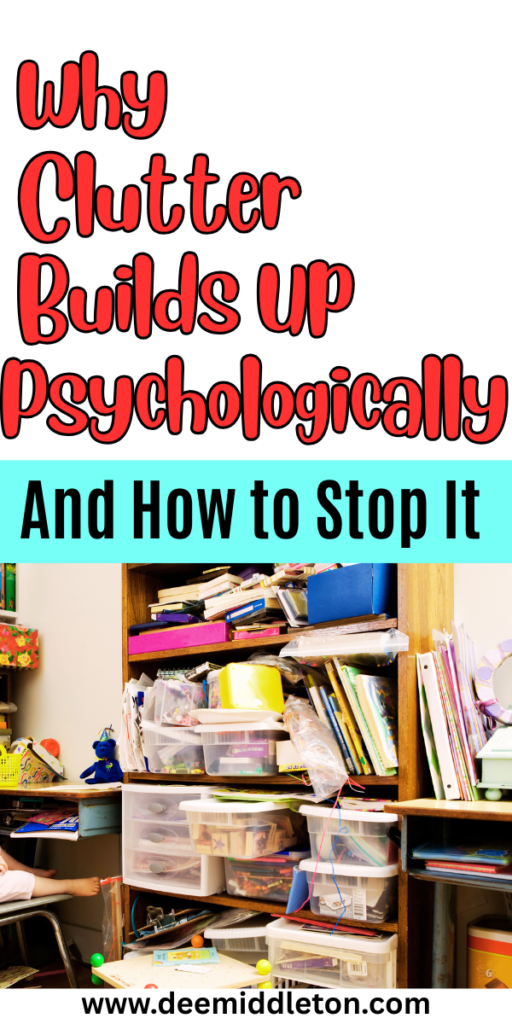
Examples include:
- Hanging up a jacket
- Filing a paper
- Putting dishes in the dishwasher
Tiny actions prevent clutter from forming.
9. Perfectionism
Ironically, perfectionism can make clutter worse.
Some people avoid organizing because they feel like they must do it perfectly.
They may think:
- “I need a whole weekend.”
- “I need the perfect storage containers.”
- “I need a complete system.”
Because the ideal conditions rarely happen, the task never starts.
How to Stop It
Focus on progress instead of perfection.
A partially decluttered drawer is better than a completely cluttered one.
Organization doesn’t need to be perfect to be effective.
10. The Emotional Weight of Clutter
Clutter doesn’t just affect your home—it affects your mental state.
Research has shown that clutter can increase:
- Stress
- Anxiety
- Decision fatigue
- Mental overload
When your environment is visually busy, your brain works harder to process it.
Decluttering, on the other hand, often creates feelings of:
- Calm
- Control
- Focus
- Mental clarity
This is why even small decluttering sessions can feel surprisingly uplifting.
How to Break the Clutter Cycle
If clutter has built up over time, the solution isn’t to suddenly become a perfect minimalist.
Instead, focus on consistent, small changes.
Here are some simple habits that help prevent clutter from returning:
1. Declutter regularly
Spend 10–15 minutes each week removing items you no longer need. You can sign up for my declutter series here if you need a push!
2. Use the “one in, one out” rule
When you bring something new into your home, remove something similar.
3. Create a donation box
Keep a box in a closet so you can easily drop items in when you’re ready to let go.
4. Reset your home daily
Spend five minutes each evening putting things back where they belong.
5. Question new purchases
Before buying something, ask:
“Where will this live in my home?”
If you don’t have a place for it, reconsider.
Clutter isn’t just about stuff. It’s about how our minds process decisions, emotions, memories, and habits.
Understanding the psychology behind clutter helps remove the shame many people feel about messy spaces. Instead of blaming yourself, you can recognize that clutter often develops naturally from human behavior.
The key is to approach decluttering with awareness, patience, and small consistent steps.
When you address both the mental and physical sides of clutter, your home gradually becomes a place that feels calmer, lighter, and easier to maintain.
And the best part?
Every item you release creates a little more space—not just in your home, but in your mind as well.
Recent Comments