
If you’re new to flower gardening, one of the first things you’ll hear gardeners talk about is annuals, perennials, and biennials. These terms describe how long a plant lives and how often it blooms. Understanding the difference will help you choose the right plants for your garden and plan a flower bed that blooms beautifully year after year. Let’s break down the differences between annuals, perennials, and biennials so you can easily understand how each type of plant works in your garden.
Check out my post on 25 Easy Flowers for Beginner Gardeners here and this post here on Flower Gardening Basics: Essential Terms Every Beginner Should Know.
Some plants only last one growing season, while others return for many years. Knowing which type you’re planting helps you decide how to design your garden, how much maintenance to expect, and when to plant new flowers. You should also know the zone where you live before you buy and plant flowers. The USDA Plant Hardiness Zone Map divides the United States into 13 zones, ranging from extremely cold northern climates to warm tropical regions.
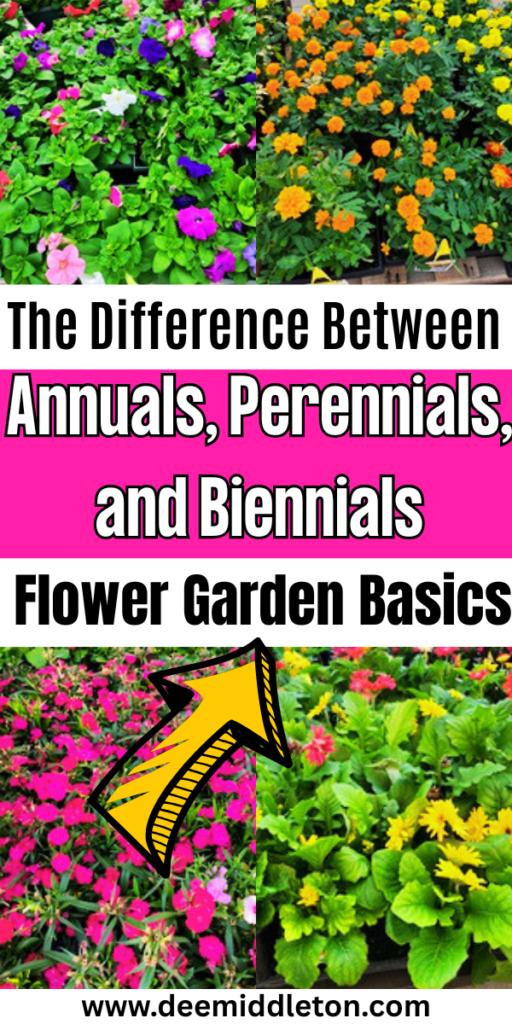
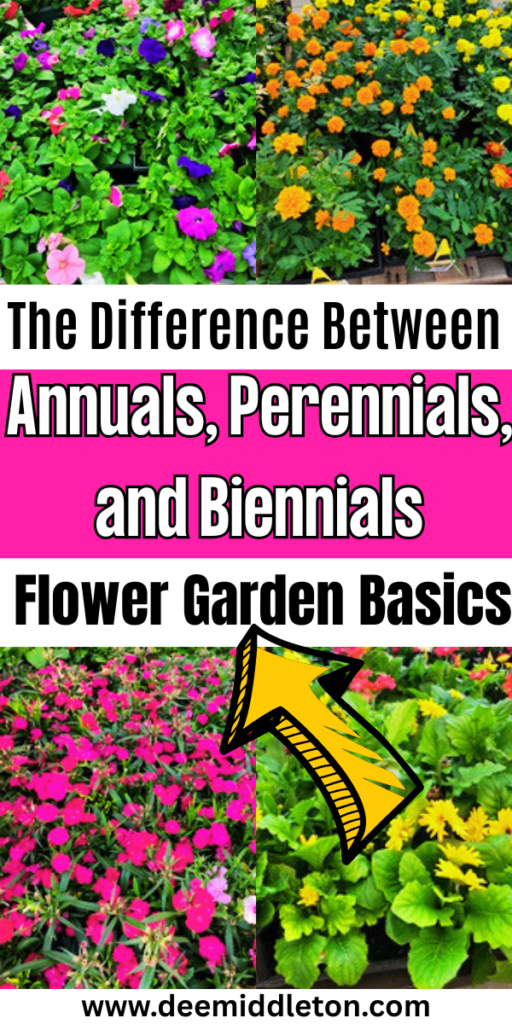
The Difference Between Annuals, Perennials, and Biennials: Flower Garden Basics
What Are Annuals?
Annuals are plants that complete their entire life cycle in one growing season. That means they grow from seed, bloom, produce seeds, and die all within a single year.
Because they grow quickly and focus on producing flowers and seeds, annuals are known for their long-lasting and vibrant blooms. Many annual flowers bloom continuously from spring until the first frost.
Characteristics of Annuals
- Live for one growing season
- Usually bloom all summer long
- Must be replanted every year
- Often have bright, showy flowers
Annuals are perfect if you love changing the look of your garden each year. Since they don’t return the following season, you can experiment with new color combinations and flower varieties every spring.
Popular Annual Flowers
Some of the most popular annuals include:
- Petunias
- Zinnias
- Marigolds
- Cosmos
- Impatiens
- Sweet alyssum
- Sunflowers
Many gardeners plant annuals in containers, hanging baskets, borders, or mixed flower beds to provide continuous color throughout the season.
What Are Perennials?
Perennials are plants that live for three years or longer. Instead of dying after one season, they go dormant in the winter and return again in the spring.
Perennials often take a little longer to establish than annuals, but once they are established, they can provide flowers year after year with very little effort.
Characteristics of Perennials
- Live for multiple years
- Return every spring
- Usually bloom for a shorter period than annuals
- Grow larger and stronger over time
Many perennials bloom for a few weeks each year rather than the entire season. Because of this, gardeners often plant a variety of perennials that bloom at different times to keep the garden colorful from spring through fall.
Popular Perennial Flowers
Common perennial flowers include:
- Coneflowers
- Black-eyed Susans
- Daylilies
- Peonies
- Lavender
- Hostas
- Shasta daisies
Perennials are great for low-maintenance gardens because once they are planted, they continue growing for years.
What Are Biennials?
Biennials have a two-year life cycle. During the first year, they usually grow leaves and roots but do not produce flowers. In the second year, they bloom, produce seeds, and then die.
Because of this two-year cycle, biennials require a little more patience than annuals.
Characteristics of Biennials
- Live for two growing seasons
- First year: grow leaves and roots
- Second year: produce flowers and seeds
- Die after flowering
Some biennials will self-seed, meaning they drop seeds that grow into new plants the following year. This can create the appearance of continuous blooms in your garden.
Popular Biennial Flowers
Examples of biennial flowers include:
- Foxglove
- Hollyhocks
- Canterbury bells
- Sweet William
- Parsley (when grown for flowers)
Biennials are often found in cottage-style gardens because of their tall, dramatic blooms.
Quick Comparison of Annuals, Perennials, and Biennials
| Plant Type | Life Span | Bloom Time | Replanting Needed |
|---|---|---|---|
| Annuals | One season | Often all summer | Yes, every year |
| Biennials | Two years | Second year only | Usually |
| Perennials | Three or more years | Usually a few weeks each season | No |
Which Type of Flower Should You Plant?
Most gardeners plant a combination of all three types to create a balanced garden.
- Annuals provide constant color throughout the season.
- Perennials provide long-term structure and reliable blooms every year.
- Biennials add unique flowers and height to garden beds.
A common strategy is to plant perennials as the foundation of your garden and fill empty spaces with colorful annuals.
Understanding the difference between annuals, perennials, and biennials is one of the most important basics of flower gardening. Each type of plant plays a different role in creating a beautiful garden.
Annuals bring vibrant seasonal color, perennials provide long-term beauty year after year, and biennials add unique blooms with their two-year growth cycle. When you combine these three types of plants, you can create a garden that stays colorful and interesting throughout the growing season.
Whether you are planting your first flower bed or expanding an existing garden, knowing how these plants grow will help you plan a garden that thrives for years to come.
Recent Comments