
Spring is one of the most exciting seasons for gardeners. After months of cold weather, it finally becomes possible to get outside, prepare the soil, and start planting beautiful flowers again. But one of the most important things to understand before planting a flower garden is your USDA hardiness zone. In this guide, we’ll look at what the USDA zones mean and explore the best flowers to plant in spring depending on where you live.
Different flowers thrive in different climates, and planting the right flowers for your zone can mean the difference between a thriving garden and constant frustration.
Check out my post on 25 Easy Flowers for Beginner Gardeners here and this post here on Flower Gardening Basics: Essential Terms Every Beginner Should Know.
What Are USDA Plant Hardiness Zones?
The USDA Plant Hardiness Zone Map divides the United States into 13 zones, ranging from extremely cold northern climates to warm tropical regions.
These zones help gardeners determine which plants are most likely to survive and thrive in their region.
The zones range from:
- Zone 1 – Coldest climates
- Zone 13 – Warmest climates
Each zone represents a 10°F difference in average winter temperature, which greatly affects which flowers can survive the winter or thrive during the growing season.
Most gardeners in the United States fall somewhere between Zone 3 and Zone 10.
If you aren’t sure what zone you live in, you can easily search online for your city and “USDA zone.” For example:
- Northern states often fall in Zones 3–5
- Much of the Midwest and Mid-Atlantic are Zones 5–7
- Southern states are usually Zones 7–9
- Tropical areas like southern Florida and Hawaii are Zones 10–13
Once you know your zone, you can choose flowers that will grow best in your climate.
Best Flowers to Plant in Spring by Zone
Below are some of the best flowers to plant in spring depending on where you live.
Zones 1–3 (Very Cold Climates)
These zones include some of the coldest regions of the United States, such as northern Alaska and parts of the Rocky Mountains.
Spring arrives later in these climates, and gardeners must focus on cold-hardy flowers that can handle chilly temperatures.
Good Spring Flowers for Zones 1–3
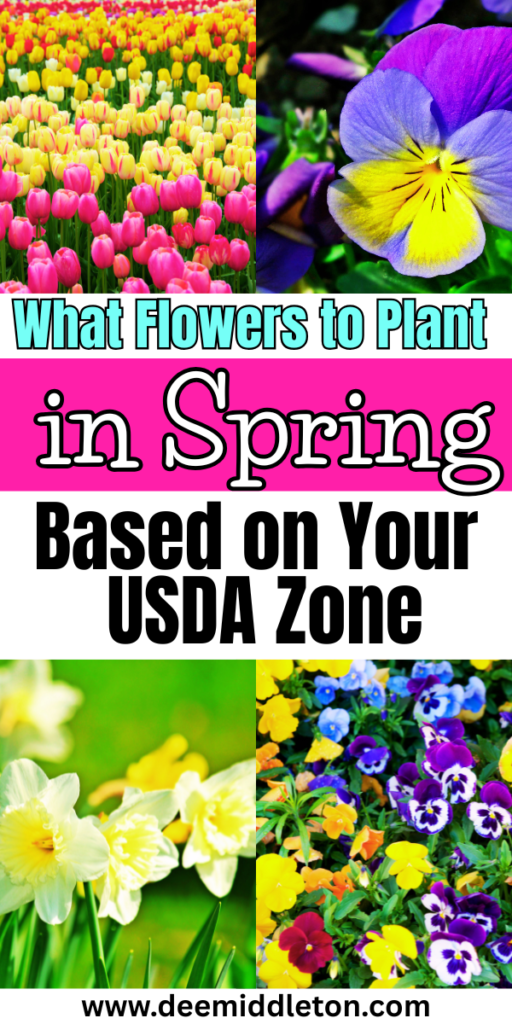
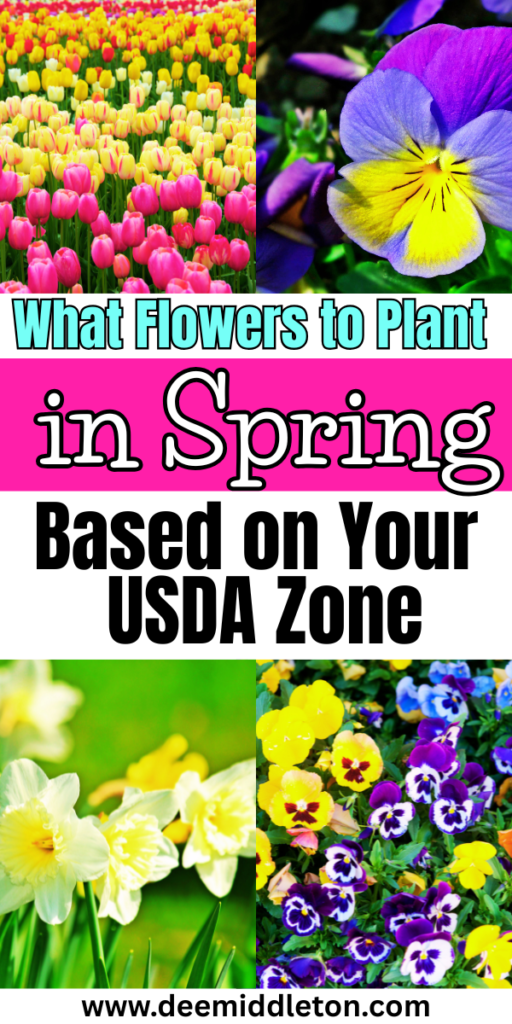
Pansies
Pansies are extremely cold tolerant and can often survive light frosts. They are one of the earliest flowers you can plant in spring.
Forget-Me-Nots
These delicate blue flowers thrive in cool climates and often reseed themselves.
Columbine
Columbine flowers are beautiful woodland plants that do well in cool northern gardens.
Lupine
Lupine produces tall spikes of colorful flowers and thrives in cooler climates.
Zones 4–5 (Cold but Moderate Winters)
Zones 4 and 5 include many northern states such as parts of the Midwest and New England.
Spring gardening typically begins in April or May, depending on frost dates.
Good Spring Flowers for Zones 4–5
Tulips
Tulips are classic spring flowers that thrive in cooler climates.
Daffodils
Daffodils are hardy bulbs that return year after year.
Snapdragons
Snapdragons tolerate cool temperatures and add height to flower beds.
Bleeding Heart
This unique plant produces heart-shaped pink flowers and loves cooler weather.
Zones 6–7 (Mild Winters)
Zones 6 and 7 cover a large portion of the United States, including areas of the Midwest, Mid-Atlantic, and parts of the South.
Gardeners in these zones have a longer growing season, which allows for a wider variety of flowers.
Good Spring Flowers for Zones 6–7
Black-Eyed Susan
These cheerful yellow flowers are extremely hardy and easy to grow.
Coneflower (Echinacea)
Coneflowers attract pollinators and thrive in warm sunshine.
Salvia
Salvia produces tall spikes of flowers and attracts bees and butterflies.
Coreopsis
Coreopsis is a low-maintenance flower that blooms throughout the summer.
Zones 8–9 (Warm Climates)
Zones 8 and 9 include much of the southern United States, including areas like Texas, Georgia, and the Carolinas.
Spring arrives early here, and gardeners can plant flowers much sooner than northern zones.
Good Spring Flowers for Zones 8–9
Zinnias
Zinnias are colorful, fast-growing flowers that love warm temperatures.
Marigolds
Marigolds are hardy, pest-resistant flowers that are great for beginner gardeners.
Cosmos
Cosmos are tall, airy flowers that thrive in warm climates.
Petunias
Petunias produce abundant blooms and work well in containers or garden beds.
Zones 10–13 (Tropical and Subtropical Climates)
These zones include tropical climates such as southern Florida, Hawaii, and Puerto Rico.
Gardeners in these regions enjoy year-round growing seasons, but spring is still an excellent time to plant flowers.
Good Spring Flowers for Zones 10–13
Hibiscus
Hibiscus produces large tropical blooms and thrives in warm climates.
Bougainvillea
Bougainvillea is a vibrant flowering vine that loves hot weather.
Impatiens
Impatiens are excellent for shady gardens.
Lantana
Lantana attracts butterflies and thrives in hot temperatures.
Tips for Planting Spring Flower Gardens
No matter which zone you live in, these tips will help your flower garden succeed.
1. Know Your Last Frost Date
Planting too early can expose young flowers to frost damage. Always check your local last frost date before planting.
2. Prepare the Soil
Healthy soil is the foundation of a beautiful garden. Adding compost or organic matter helps flowers grow stronger roots.
3. Choose Sun-Appropriate Flowers
Some flowers need full sun, while others prefer partial shade. Planting them in the correct light conditions will help them thrive.
4. Water Consistently
Newly planted flowers need consistent moisture until their roots become established.
5. Deadhead Spent Blooms
Removing faded flowers encourages many plants to produce more blooms throughout the season.
Planting flowers in the spring is one of the most rewarding parts of gardening. By choosing flowers suited to your USDA hardiness zone, you give your garden the best chance to thrive.
Whether you live in a cold northern climate or a tropical region, there are beautiful flowers that will grow well in your area.
With a little planning, the right plants, and some basic care, your spring flower garden can become a colorful and relaxing space you enjoy all season long.
Recent Comments